

Navigating through stacks of paperwork while grieving a loved one feels overwhelmingly daunting. Selling inherited property requires extensive documentation, making the process complex and emotionally draining for bereaved families.
Without proper guidance and organization, heirs risk legal complications and costly delays. Understanding the required documents streamlines the process and helps achieve a smoother property transfer.
The essential documents for selling inherited property include a certified death certificate, Letters Testamentary, property deed, heir identification papers, tax statements, mortgage records, lien documentation, and professional appraisal reports.
During closing, sellers must present a purchase agreement, settlement statement, and completed deed transfer paperwork. Each document serves a specific legal purpose in establishing ownership rights and facilitating the sale.
This guide explores every aspect of documentation needed when selling inherited property, from acquisition to closing.
Key Takeaways
- Certified death certificate, Letters Testamentary or Administration, and property deed establish legal authority to sell inherited property.
- Notarized consent forms from all heirs and court approval may be required before proceeding with the sale.
- Current property tax statements, mortgage records, and lien documentation must show the property is free of outstanding liabilities.
- Professional appraisal and step-up basis records are essential for accurate capital gains tax calculations and compliance.
- Purchase agreement, settlement statement, and deed transfer documentation are necessary to complete the closing process and distribute proceeds.
What Documents Do You Need to Sell an Inherited Property?
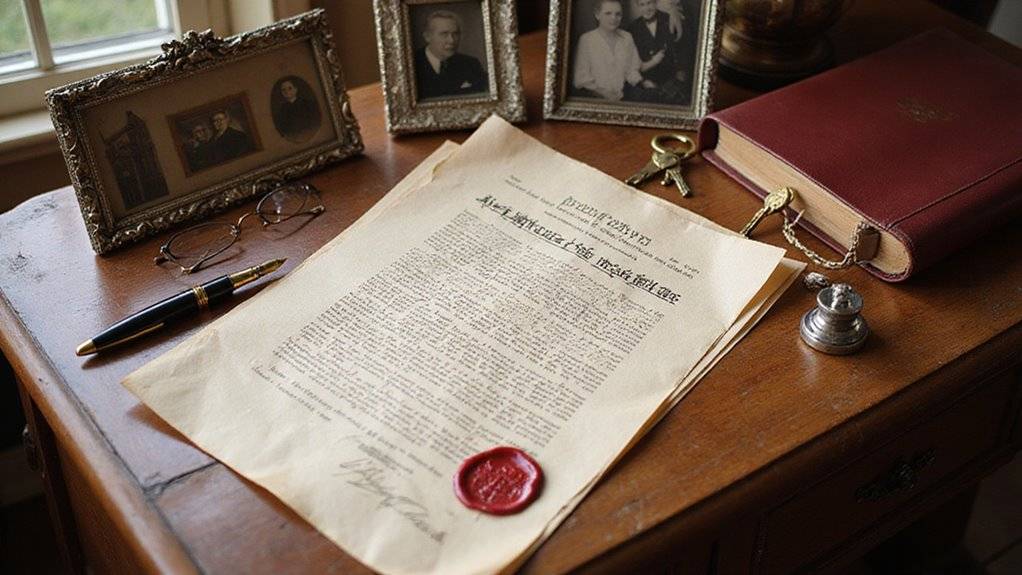
Essential documents needed for selling inherited property include:
A certified death certificate proves the previous owner’s passing. Letters Testamentary or Letters of Administration establish your legal authority to sell. The property deed confirms ownership transfer rights.
Tax documents play a crucial role in the sale process. A current property tax statement shows no outstanding liabilities. The date-of-death property appraisal determines the tax basis for capital gains. Any existing lien releases must clear the title.
Moreover, probate court orders validate your right to complete the sale. These documents protect all parties and ensure a smooth transaction.
How to Obtain Proof of Inheritance?
You’ll need to secure several key documents to prove your legal right to inherit and sell the property. Start by obtaining certified copies of the death certificate from Virginia’s Office of Vital Records, as you’ll need multiple copies for various entities. Next, file with the probate court to receive either Letters Testamentary (if there’s a will) or Letters of Administration (if there isn’t), though small estates may qualify for a simpler Affidavit of Heirship instead.
Death Certificate Acquisition
Death certificates come from Virginia’s Office of Vital Records or local registrar offices where the death occurred. You must obtain 3-5 certified copies for legal requirements and transactions. The standard processing time takes 7-10 business days.
These official documents prove death legally and allow estate proceedings to begin. Banks, courts, and title companies require original certified copies for all transactions.
A death certificate enables beneficiaries to move forward with property sales and asset transfers. Quick acquisition helps prevent delays in probate and other legal processes. Contact the Virginia Department of Health to start your request.
Probate Court Documentation
Your first task in probate court is to file documents at the Virginia Circuit Court in the deceased’s county of residence. The process requires a death certificate and valid will (if one exists) for initial filing. The court will review these documents to verify your authority.
The court provides Letters Testamentary for estates with wills or Letters of Administration for estates without wills. These legal documents prove your right to manage the estate. Moreover, multiple certified copies help streamline property transactions with title companies and buyers.
You must also submit a complete estate inventory to the court for review. After careful evaluation, the court grants full authority to handle estate matters.
Letters Testamentary or Administration
Letters Testamentary and Letters of Administration authorize legal management of an estate.
Letters Testamentary apply when a will exists, while Letters of Administration are issued for estates without wills. The probate court reviews your filing before issuing these essential documents. These letters prove your legal authority to handle the estate’s property.
Furthermore, certified copies become necessary for working with real estate professionals and title companies. The Circuit Court clerk can provide multiple original copies for different transaction parties. Your authority remains valid throughout the entire property transfer process.
Affidavit of Heirship Process
An affidavit of heirship requires proper filing with official documentation. Submit the completed affidavit at your local Circuit Court Clerk’s office alongside the original death certificate. This process offers a faster alternative to lengthy probate proceedings.
However, property sales may face extra requirements. Title companies often request additional verification documents before finalizing real estate transactions involving inherited property. Most title companies conduct their own review process to ensure clear ownership rights.
What Legal Documents Are Required for the Sale?
Essential legal documents must accompany a property sale in Virginia. A valid death certificate confirms the passing of the previous owner. Letters testamentary or administration prove legal authority to sell the property. The property deed verifies ownership and enables transfer.
Current tax statements and lien releases ensure a clear title without encumbrances. These documents protect both seller and buyer interests during the transaction. Additionally, all papers need proper notarization and filing with relevant authorities.
The Circuit Court Clerk’s office provides most required paperwork. Meanwhile, the Vital Records Office issues death certificates. Local tax offices supply necessary statements.
How to Handle Tax Documentation for Inherited Properties?
You’ll need specific tax documents to minimize your liability and satisfy IRS requirements when selling inherited property. The most critical forms include records proving your step-up basis (the property’s fair market value at the date of death), capital gains calculations, and estate tax filings if applicable. Organizing your property tax statements, date-of-death appraisals, and Form 1040 Schedule D documentation before closing prevents delays and ensures accurate reporting.
Capital Gains Tax Records
Three key documents validate capital gains tax for inherited property. A professional appraisal establishes the stepped-up basis as of the death date. IRS Form 1040 Schedule D and Form 8949 report your official sale proceeds. Inheritance tax returns prove prior estate valuation and taxes paid.
To minimize tax obligations, gather these records before any property sale. The final tax amount reflects the difference between your sale price and stepped-up basis. Proper documentation protects your interests and ensures full IRS compliance.
Estate Tax Considerations
Estate taxes affect property transfers after death. The federal estate tax applies to estates worth over $12.92 million in 2023. Executors must file IRS Form 706 within nine months of the death date.
Your estate planning documents need proper asset valuations and gift records. This documentation helps determine tax obligations accurately. A title company verifies tax compliance during closing procedures.
Virginia has no state estate or inheritance tax requirements. Still, federal tax clearance remains essential for large estates. Clear records protect heirs and streamline the inheritance process.
Property Tax Documentation
Three key tax documents must accompany your property closing process. A current tax statement proves all payments are up to date. Your local treasurer must provide written confirmation that no taxes remain unpaid. Tax prorations ensure fair division of costs between seller and buyer.
These documents serve vital purposes. Clear proof of tax status prevents future disputes about payment responsibility. Documentation from government officials adds credibility to the transaction. The proration agreement establishes each party’s financial obligations moving forward.
Step-Up Basis Calculation Forms
Step-up basis calculation requires three essential documents for tax compliance and property transfers.
An official date-of-death appraisal determines the new cost basis for inherited property. A property deed proves legal ownership and transfer details. Form 8949 reports any capital gains to the IRS during tax season.
Moreover, beneficiaries need these papers for future sales and accurate tax reporting. Smart record-keeping prevents tax complications and ensures smooth property transactions. Keep all documents securely stored with property records for quick access.
What Property-Specific Documents Should You Prepare?

Essential property-specific documents include ownership deeds, tax records, and mortgage releases.
A current deed proves legal ownership transfer from the deceased to the beneficiary. Property tax statements confirm no outstanding tax obligations exist. Mortgage satisfactions and lien releases verify the property is free from debts.
These legal documents protect both sellers and buyers during the sale process. Title companies require this paperwork to ensure clean transfers. Complete documentation speeds up closings and reduces delays. Moreover, proper paperwork builds buyer confidence and supports smoother transactions.
What are Common Documentation Challenges When Selling Inherited Homes?
You’ll likely encounter obstacles that slow your sale, even with proper probate documents in hand. The most frequent issues include disputes among multiple heirs over property rights, missing or lost title documents that require legal action, and unexpected liens or judgments against the property. Outdated property surveys can also complicate closing, particularly if boundary lines have changed or improvements weren’t properly recorded.
Multiple Heir Complications
Property inheritance with multiple heirs requires special legal steps for selling. Each heir must provide notarized consent forms to approve the sale of inherited property. A court-ordered partition becomes necessary when heirs cannot reach unanimous agreement.
Key documents include signed consent forms from all heirs, partition action papers showing ownership percentages, and distribution agreements for sales proceeds. These legal safeguards protect everyone’s interests. Moreover, proper documentation ensures smooth property transfer to new buyers.
The process moves forward once all paperwork meets legal requirements. As a result, buyers receive clear title and heirs get their fair share.
Missing Title Documents
Contact the Virginia Clerk of Circuit Court to obtain copies of title records. Legal records must show an unbroken chain of ownership for a clear property title. Title companies offer expert help to locate missing documents quickly.
Gather all available deeds, mortgages, and ownership papers right away. A quiet title action through the court system resolves unclear ownership issues. A complete title search prevents problems during property sales.
Most title issues can reach resolution within 30-60 days. However, complex cases may need additional legal support.
Property Liens and Judgments
Property liens and judgments are legal claims against a property that must be cleared before sale.
Three essential documents resolve property liens: mortgage discharge certificates, property surveys, and paid tax statements with lien release letters. These papers prove all debts have been satisfied.
A title company can search public records to find existing liens. Quick action to address any claims protects your interests as a seller. Title professionals understand the legal requirements and can guide the resolution process efficiently.
Outdated Property Surveys
A new property survey becomes necessary when old surveys no longer reflect current boundaries or structures.
Licensed surveyors charge between $300 to $800 for updated property surveys. The process typically takes 1 to 2 weeks to complete. A current survey prevents boundary disputes and ensures accurate property lines.
As a result, this document protects your investment and supports real estate transactions. Fresh surveys reveal changes like fences, additions, or encroachments that affect property value. Moreover, mortgage lenders often require updated surveys before approving loans.
How to Organize Your Documents for a Fast Cash Sale?
You’ll close faster on your inherited property when you organize your documents systematically before approaching buyers. Creating a complete checklist, digitizing your paperwork, and partnering with an experienced title company will streamline the entire transaction. This preparation eliminates delays caused by missing documents and positions you to accept a cash offer within days instead of weeks.
Creating a Document Checklist
A complete document checklist prevents closing delays and ensures a smooth property transaction.
Three essential documents must be gathered: death certificate with probate paperwork, property deed with clear title, and tax records showing paid taxes. Digital copies speed up the review process with title companies.
Keep all paperwork in a single folder for easy access. As a result, your buyers can close faster while families move forward with confidence. Professional organization demonstrates reliability and trustworthiness throughout the transaction.
Digital Document Organization
Effective digital document organization requires a clear system and consistent naming.
Create a main folder with the property address and separate subfolders for probate papers, deeds, taxes, and liens. Scan documents at 300 DPI minimum in searchable PDF format. Label each file with descriptive names like “Death_Certificate_2024” or “Probate_Order_2021.”
For enhanced security and accessibility, upload files to trusted cloud platforms such as Google Drive or Dropbox. Well-organized digital documents speed up property transactions and simplify buyer communications. Professional document management builds buyer confidence and supports smoother closings.
Working with Title Companies
Title companies serve as essential partners during real estate transactions. They examine property records, verify ownership claims, and ensure all documents meet Virginia legal requirements. A professional title company handles critical tasks like coordinating payoffs and securing lien releases before closing day.
Beyond paperwork, these experts protect both buyers and sellers from future ownership disputes. Their thorough review process catches potential issues early, preventing costly problems after the sale. In turn, this creates a secure, efficient closing process for everyone involved.
Expediting Documentation Process
Organized documentation speeds up property sales by 2-3 weeks. All required documents must be ready before listing: death certificates, probate orders, and Letters Testamentary. Digital copies provide easy access while physical documents stay secure in a dedicated folder.
Smart preparation prevents costly delays later. Your core document package needs the property deed, recent tax statements, and lien releases. The title company can quickly spot missing items once they receive complete files. This proactive approach keeps transactions moving smoothly toward closing.
Ready to Sell Your Inherited Property? Contact Align Real Estate Solutions Today
Selling inherited property requires careful attention to documentation to avoid common delays and complications. The essential documents include death certificates, probate letters, property deeds, and complete tax records. These papers establish your legal right to sell the inherited property and ensure a smooth transaction process.
At Align Real Estate Solutions, we understand the challenges of managing inherited property sales across Virginia cities. We offer straightforward cash purchases for inherited properties, eliminating complex paperwork and lengthy waiting periods. Our team handles properties in any condition, making the selling process easier for beneficiaries.
If you need assistance with inherited property documentation or want to explore a quick sale option, we’re ready to help. Our experienced team at Align Real Estate Solutions provides free, no-obligation quotes for inherited properties throughout Virginia. We work directly with beneficiaries to create simple solutions that respect their time and circumstances.